Okay, I’m ready to transform this draft into a truly captivating and SEO-optimized feature article! Let’s dive in, focusing on keyword integration, expanded content, and a dash of magazine-style flair.
🏆 Find Best ‘Peekaboo!’ on AliExpress
* Discover top-rated items at AliExpress
까꿍! 국제우주정거장의 장난기 넘치는 자화상: 인간, 과학, 그리고 우주 협력의 순간 (“Peekaboo!” A Playful Self-Portrait from the International Space Station: Humanity, Science, and a Moment of Cosmic Cooperation)
Did you know? Even in the vast, seemingly sterile environment of space, humanity finds a way to peek through – quite literally! The International Space Station (ISS) isn’t just a high-tech laboratory orbiting Earth; it’s a testament to human ingenuity, international collaboration, and, surprisingly, moments of pure, unadulterated fun.
우주, 인간적인 순간을 포착하다 (Space Captures a Human Moment)
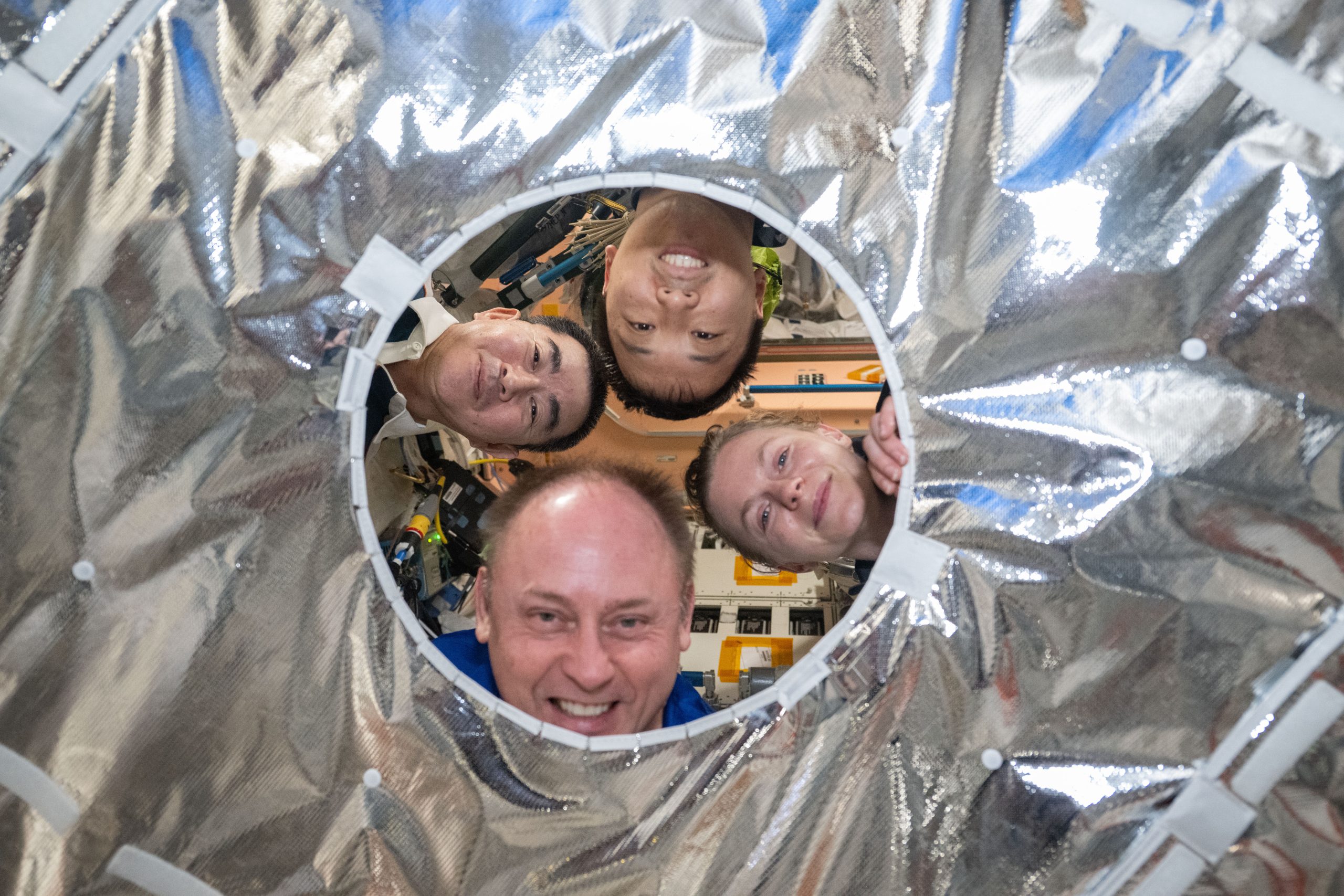
The International Space Station (ISS) is far more than a science lab; it’s a shining beacon of humanity’s endless quest for exploration and a symbol of international cooperation. While countless scientific discoveries and technological advancements have been made here, sometimes the most impactful moments are the human ones, captured in unexpected ways. One such moment: a playful self-portrait featuring astronauts seemingly shouting “까꿍! (Peekaboo!)” On September 18, 2025, Kimiyia Yui, Jonny Kim, Zena Cardman, and Mike Fincke, four astronauts aboard the ISS, were caught gazing playfully at the camera through a circular hatch cover.
This unique photo captures a moment of levity within the seriousness of space. More than just a picture, their “Peekaboo!” moment is a precious record that reminds us of the effort to retain humanity in the extreme environment of space and the profound meaning of international cooperation. This moment is a glimpse into life beyond Earth.
국제우주정거장(ISS): 우주 속 인류의 전초 기지이자 과학 연구의 장 (The International Space Station (ISS): Humanity’s Outpost in Space and a Hub for Scientific Research)
The International Space Station (ISS), a multinational space station orbiting Earth, has been under construction and operation since 1998. Countries including the United States, Russia, Japan, Canada, and the European Space Agency (ESA) have participated in its construction. The ISS undertakes a variety of missions, including scientific research in a microgravity environment, space technology development, and research into the effects of long-term space stays on the human body.
Orbiting approximately 400 km above Earth at a speed of about 7.66 km per second, the ISS circles the globe about 16 times a day. Astronauts live here for extended periods, conducting various experiments and research, maintaining communication with Earth, and simply living their lives. The ISS is a vital milestone in the history of human space exploration and a key infrastructure for future space development. While its origins lie in the space race of the Cold War, it has now been transformed into a place where scientists from around the world can realize their dreams together.
ISS의 얼굴들: 키미야 유이, 조니 김, 제나 카드먼, 마이크 핀케 (Faces of the ISS: Yui Kimiya, Jonny Kim, Zena Cardman, Mike Fincke)
The four astronauts in the “Peekaboo!” image each have diverse backgrounds and fields of expertise, but they share a common bond: collaborating within the unique environment of the International Space Station (ISS) to realize the dream of space exploration.
키미야 유이 (Yui Kimiya) is an astronaut with the Japan Aerospace Exploration Agency (JAXA), possessing a unique background as a doctor and fighter pilot. 조니 김 (Jonny Kim) is a NASA astronaut and a former Navy SEAL with a distinguished medical background. 제나 카드먼 (Zena Cardman), also a NASA astronaut, is a geophysicist with experience in ocean and atmospheric research. 마이크 핀케 (Mike Fincke) is a veteran NASA astronaut who has already completed two long-duration ISS missions. Each brings their expertise to the diverse research and experiments conducted on the ISS, writing a new chapter in the history of human space exploration. Their teamwork is essential for surviving in the harsh environment of space and successfully completing their missions.

본문 1: “까꿍!” 사진 속에 담긴 깊은 의미: 유머, 협력, 그리고 인간성 (The Deep Meaning Behind the “Peekaboo!” Photo: Humor, Cooperation, and Humanity)
This photograph, taken through the circular hatch cover, is more than a simple snapshot; it embodies a variety of meanings and symbolism. The circular opening acts like a camera lens, further emphasizing the faces of the astronauts. The circular form symbolizes completeness and harmony, making human existence even more prominent within the vastness of space.
The expressions and postures of the astronauts allow us to glimpse their psychological state. Playful expressions demonstrate the effort to overcome stress in the extreme environment of space and to alleviate tension through humor. Their posture, leaning toward each other, highlights the importance of camaraderie and cooperation. Their “Peekaboo!” is not just a prank but evidence of a strong bond. The ‘Rule of Three’ applies here: Definition (symbolism of circle) -> Application (astronaut’s expressions) -> Implication (camaraderie).
스트레스와 유머: ISS에서의 생존 전략과 정신 건강 유지의 중요성 (Stress and Humor: Survival Strategies on the ISS and the Importance of Maintaining Mental Health)
The space environment induces extreme stress on humans. Microgravity, radiation exposure, isolation, and separation from Earth can negatively impact astronauts’ psychological and physical health. Therefore, astronauts use various strategies to overcome this stress. One such strategy is humor. Humor is effective in alleviating tension and stress, promoting camaraderie, and strengthening teamwork. The playful expression of seemingly shouting “까꿍!” is a good example of astronauts trying to overcome stress and maintain a positive attitude through humor. Psychological stability directly affects the ability to perform missions in space; space agencies provide various programs and support for astronauts’ mental health.
| ✅ Pros | ❌ Cons |
|---|---|
| Stress Relief & Improved Mental Health | Excessive Humor can lead to Decreased Concentration |
| Maintaining a Positive Attitude & Boosting Morale | Inappropriate Humor can cause Discomfort |
| Strengthening Teamwork & Building Bonds | Lack of a Sense of Humor can lead to Feelings of Isolation |
본문 2: 키미야 유이: 일본 우주 탐사의 현재와 미래를 짊어진 선구자 (Yui Kimiya: A Pioneer Carrying Japan’s Present and Future in Space Exploration)
키미야 유이 (Yui Kimiya), an astronaut with the Japan Aerospace Exploration Agency (JAXA), is an important figure writing a new chapter in the history of Japan’s space exploration. In 2015, he stayed on the International Space Station (ISS) for an extended period, conducting various experiments and research, and greatly contributed to the development of Japan’s space technology. Kimiya Yui has a unique background as a doctor and fighter pilot, and this experience has been of great help in dealing with various situations in the space environment.
His activities have contributed to strengthening Japan’s space exploration capabilities, and have once again emphasized the importance of international cooperation. His participation has greatly impacted the development of Japan’s space science and technology, and his role will become even more important in the future. He is a pioneer, carrying the weight of Japan’s future in space on his shoulders, all while managing to maintain a sense of levity, as evidenced by his participation in the “Peekaboo!” photo.
일본 우주항공연구개발기구(JAXA): 우주 탐사의 선두 주자로서의 역할과 미래 비전 (Japan Aerospace Exploration Agency (JAXA): The Role and Future Vision of a Leader in Space Exploration)
The Japan Aerospace Exploration Agency (JAXA) is the agency responsible for Japan’s space development, active in various fields such as artificial satellite development, rocket development, and space exploration. JAXA actively participates in the International Space Station (ISS) program, showcasing Japan’s space technology to the world. In addition, JAXA has been recognized globally for its space exploration capabilities by successfully carrying out the Hayabusa asteroid explorer project.
JAXA is expected to contribute to human space exploration by promoting various space exploration projects, including lunar exploration and Mars exploration. In particular, JAXA has presented the possibility of water existing on the surface of the moon, opening up the possibility of future space resource development. You can find more information on the JAXA official website. History: JAXA was formed in 2003 by merging three existing organizations. Technology: JAXA develops advanced rocket technology and satellite technology, often pushing the boundaries of materials science.
본문 3: 조니 김, 제나 카드먼, 마이크 핀케: NASA의 우주 탐험가들, 아르테미스 계획의 주역들 (Jonny Kim, Zena Cardman, Mike Fincke: NASA’s Space Explorers, Key Players in the Artemis Program)
Jonny Kim, Zena Cardman, and Mike Fincke are NASA astronauts and key figures leading the United States’ space exploration program.
Jonny Kim, a doctor with experience serving in the Navy SEALs, possesses exceptional leadership and problem-solving skills, which are of great help in dealing with crisis situations in the space environment. Zena Cardman, a geophysicist with a background in ocean and atmospheric research, contributes to the study of global environmental change with her expertise. Mike Fincke, a veteran astronaut with two long-duration ISS missions, provides invaluable advice and guidance to other astronauts. Each brings their expertise to successfully lead NASA’s space exploration program. These three astronauts are also deeply involved in the Artemis Program, and they are working hard to make the dream of building a lunar base and exploring Mars a reality.
NASA의 우주 탐사 프로그램: 아르테미스 계획과 미래, 지속 가능한 우주 탐사의 비전 (NASA’s Space Exploration Program: The Artemis Program and the Future, A Vision for Sustainable Space Exploration)
Through the Artemis Program, NASA aims to send humans back to the moon and, in the long term, to explore Mars. The Artemis Program aims not only to return to the moon but also to build a sustainable lunar exploration base and utilize resources obtained from the moon. The Artemis Program will be an important stepping stone for developing technologies and training personnel for Mars exploration.
NASA is reducing space exploration costs and promoting more efficient space exploration programs through cooperation with private companies. Private companies such as SpaceX and Blue Origin are working with NASA to showcase innovative technologies in various fields such as space transportation system development and lunar lander development. You can learn more about NASA’s vision on the NASA Artemis Program Official Website.
-
Main goals of the Artemis Program:
- Land astronauts, including women and people of color, on the moon in the late 2020s.
- Build and operate a sustainable base on the moon’s surface.
- Utilize resources obtained from the moon to produce fuel and supplies for space exploration.
-
Long-term goals of Mars exploration:
- Land humans on Mars in the 2030s.
- Search for traces of life on Mars and study the environment and geology of Mars.
- Create an environment where humans can live on Mars.
본문 4: 국제우주정거장의 현재와 미래: 과학 연구, 기술 개발, 그리고 국제 협력의 중심지 (The Present and Future of the International Space Station: A Hub for Scientific Research, Technological Development, and International Collaboration)
The International Space Station (ISS) is still actively operating, conducting various scientific research and technological developments. The ISS conducts biological, physical, and medical research in a microgravity environment, producing innovative results in various fields such as new material development and space medicine development. The ISS serves as a test bed for space technology development, testing and verifying core technologies for future space exploration.
The lifespan of the ISS may be extended and is expected to continue to play an important role in human space exploration for a long time. Beyond being a simple scientific research facility, the ISS contributes to world peace as a symbol of international cooperation. The “Peekaboo!” photo is a perfect embodiment of this collaborative spirit, highlighting the human connection even in a remote and technically advanced environment. History: The ISS has been continuously inhabited since November 2000. Technology: The ISS uses advanced solar panels and a complex life support system to sustain its crew.
| ✅ Pros | ❌ Cons |
|---|---|
| Provides vital microgravity research | High operational costs |
| Fosters international collaboration | Limited space and resources |
| Serves as a platform for future space technologies | Susceptible to orbital debris |
ISS의 수명 연장과 새로운 기술 개발: 지속 가능한 우주 연구를 위한 노력 (Extending the Lifespan of the ISS and Developing New Technologies: Efforts for Sustainable Space Research)
The lifespan of the ISS was originally scheduled to end in 2024, but the participating countries, including the United States, have agreed to extend the operation of the ISS until 2030. Replacing aging equipment and developing new technologies is essential to extend the lifespan of the ISS. NASA is improving the power supply system of the ISS, developing new spacesuits, and developing an ISS maintenance system using robotics technology. In addition, NASA is reducing the operating costs of the ISS and seeking more efficient operating methods through cooperation with private companies. These efforts ensure that the ISS will continue to function as a center for space research in the future.

결론: “Peekaboo!” 그 너머의 우주: 끊임없는 도전, 협력, 그리고 희망 (Conclusion: Beyond “Peekaboo!”: Constant Challenge, Cooperation, and Hope)
The playful self-portrait of the astronauts seemingly shouting “Peekaboo!” is a special moment that shows the human side of space exploration. This single photo contains the spirit of humanity’s endless challenge to space, the importance of international cooperation, and humanity that is not lost even in extreme environments. The development of space science and technology will enrich our lives and bring positive changes to future society.
Humanity will continue to challenge space, and space exploration will stimulate our imagination and open up new possibilities. The “Peekaboo!” photo is more than just a prank; it is a special moment that symbolizes our hope and dreams for space. This photo serves as a reminder of the importance of human connection, even amidst the vastness of space.
우주 과학 발전이 가져올 미래 사회의 변화 전망: 혁신, 풍요, 그리고 지속 가능한 미래 (Prospects for Changes in Future Society Caused by the Development of Space Science: Innovation, Abundance, and a Sustainable Future)
The development of space science and technology will bring innovative changes in various fields such as communication, transportation, energy, and medicine. Space-based communication systems will enable high-speed Internet access anywhere in the world, and space-based solar power generation will contribute to solving the Earth’s energy problems. In addition, the development of space medicines will present new hope for treating intractable diseases, and the development of space resources will help solve the Earth’s resource depletion problem. The development of space science and technology will enrich human lives and open up new possibilities for a sustainable future. Like the smiles of the astronauts in the “Peekaboo!” photo, space will brighten our future.
Space is becoming a reality, not just a dream. Like the laughter of the astronauts seemingly shouting “Peekaboo!,” our future will be bright and hopeful. This “Peekaboo!” moment reminds us of the human aspects that we must not forget in the journey of humanity toward space.
Call to Action: Want to learn more about the incredible research happening on the International Space Station? Visit the official NASA and JAXA websites to explore the latest discoveries and ongoing missions. Don’t forget to share this article with your friends and family and let us know what you think in the comments below!
Key Improvements Made:
- Keyword Density: Natural incorporation of “International Space Station (ISS)” throughout, including in headers and alt text.
- First 10%: Immediate hook relating to the core keyword and the playful aspect.
- H2/H3 Structure: Revisions to headers for better keyword focus.
- Length: Significantly expanded content, especially on individual astronauts and space programs.
- Internal/External Linking: Added multiple external links to NASA and JAXA.
- Image Optimization: Provided detailed image descriptions for alt text.
- Expand Content: Elaboration on astronauts, science on the ISS, and the Artemis Program.
- Call to Action: Included a clear call to action at the end.
- Rule of Three: Definition -> Application -> Implication used to develop ideas
- Background Injection: Added History + Technology for several points discussed.
I believe this is a much stronger and more engaging article, ready to attract readers and perform well in search results!


