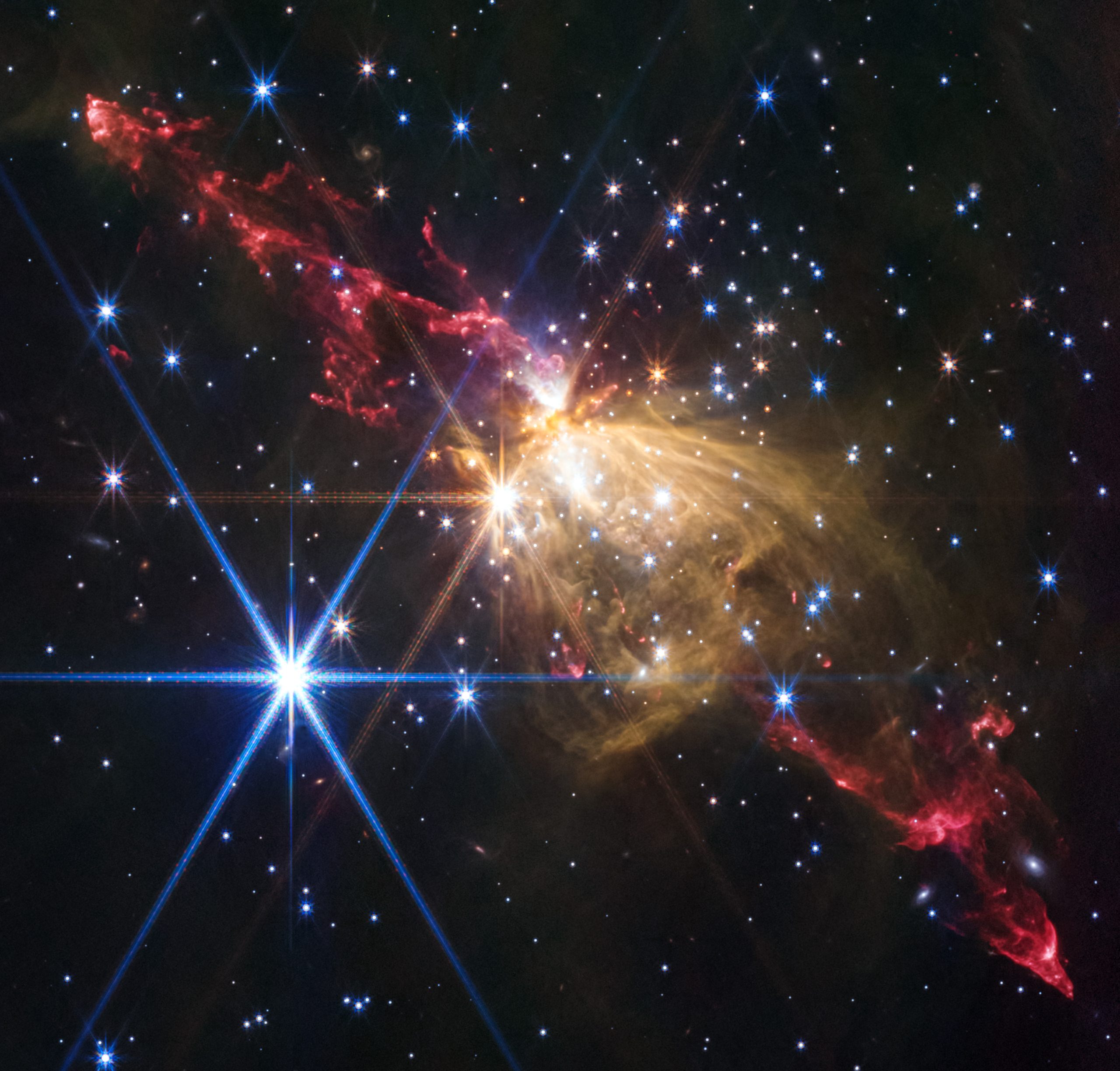
별의 엔진: Sh2-284 제트가 밝히는 별의 탄생 비밀 (The Engine of Stars: Sh2-284 Jets Unveiling the Secrets of Starbirth)
별들은 어떻게 태어나는 걸까요? Did you know that the process of stellar birth, unfolding in the depths of the universe, remains shrouded in mystery? But recent observations of stellar jets within the Sh2-284 nebula, captured by the James Webb Space Telescope (JWST), provide crucial clues to understanding this complex process. Like a dynamic painting on the canvas of space, the Sh2-284 stellar jet holds the key to unlocking the secrets hidden in the birth of stars. Imagine these jets as celestial midwives, gently nudging nascent stars into existence. This article will delve deep into the science, the history, and the future of stellar jet research, with a specific focus on the remarkable discoveries made possible by JWST in studying the stellar jet of Sh2-284. We’ll explore how this phenomenon, visible within Sh2-284, is reshaping our understanding of stellar evolution.
🏆 Find Best ‘Stellar Jet’ on AliExpress
* Discover top-rated items at AliExpress
서론: Sh2-284와 별의 제트 소개 (Introduction: Sh2-284 and Stellar Jets)
Sh2-284, a vast HII region (ionized hydrogen region) located approximately 15,000 light-years away in the constellation Sagittarius, is our focal point. Think of it as a cosmic incubator, where hydrogen gas is ionized and emits light due to the intense ultraviolet radiation emitted from scorching hot, young stars residing within. This nebula is an active star-forming region, teeming with countless nascent stars awaiting their grand debut onto the cosmic stage. Because of this frenetic star formation activity, it is a key location to study the stellar jet phenomenon. We will explore the role of these stellar jets within the dynamic environment of Sh2-284.
A stellar jet refers to the high-speed plasma flow ejected from a newly born protostar. These jets are powerfully emitted along the star’s polar axis and cause various phenomena as they collide with the surrounding interstellar matter. While seemingly a byproduct of a star’s growth process, the role of a stellar jet is far more significant than just mere exhaust. They are not just byproducts; they are active agents in shaping the destiny of the stars they accompany. Think of them like the exhaust from a powerful engine, shaping the environment around them as they surge outwards. The stellar jets, such as those seen in Sh2-284, influence the surrounding gas and dust clouds.
The James Webb Space Telescope possesses the remarkable ability to observe infrared regions that were previously inaccessible to conventional telescopes. In particular, its Near-Infrared Camera (NIRCam) and Mid-Infrared Instrument (MIRI) allow us to peer more closely into the star formation process occurring within cold dust clouds. The reason the Webb Telescope was used to observe the Sh2-284 stellar jet is precisely because of its exceptional observational capabilities. Because infrared light can penetrate dust, it can capture stellar jets hidden by dust more clearly, like seeing through fog on a cold morning. This makes understanding the Sh2-284 stellar jet and its characteristics crucial for refining star formation theories.
- Webb Telescope’s superior infrared observation capabilities, providing unprecedented detail of the Sh2-284 stellar jet.
- Sh2-284 nebula’s active star formation activity, making it an ideal laboratory for studying stellar jet phenomena.
- Importance of studying stellar jet phenomena for a more complete understanding of stellar evolution.
웹 우주 망원경의 Sh2-284 별 제트 관측 능력 (Webb Space Telescope’s Observation Capabilities of the Sh2-284 Stellar Jet)
The James Webb Space Telescope isn’t just another telescope; it represents a quantum leap in our ability to observe the cosmos. Its design is specifically optimized for infrared astronomy, allowing it to pierce through the gas and dust that obscure our view in visible light. This is particularly crucial when studying star formation, as stars are born deep within these dusty clouds, much like precious jewels hidden within a velvet box. Therefore, the ability to observe the stellar jet of Sh2-284 in infrared light is crucial.
The NIRCam and MIRI instruments are particularly important here. NIRCam allows for detailed imaging of the near-infrared light, revealing the structure of the Sh2-284 stellar jet and its interaction with the surrounding gas. It’s like having X-ray vision for the cosmos, allowing us to see the skeletal structure of the jets. MIRI, on the other hand, is sensitive to mid-infrared light, which allows us to study the composition of the dust and gas in the jet. It’s like analyzing the chemical fingerprints of these cosmic streams. The combination of these two instruments gives astronomers a complete picture of the Sh2-284 stellar jet and its environment. They provide a holistic view, painting a comprehensive picture of the processes at play within Sh2-284.
The advantage of using infrared light is the ability to see past obstructions of dust and gas. This makes understanding and observing the Sh2-284 stellar jet easier. Without infrared observation, many features of the Sh2-284 stellar jet would be hidden from our view. The infrared capabilities of JWST allow us to study the full extent and composition of these jets.
Understanding the Sh2-284 Stellar Jet Formation Process: Theoretical Background
How are stellar jets formed? The answer lies in the complex physical environment surrounding a protostar. The mainstream theory for stellar jet formation is as follows:
- Accretion Disk Formation: The protostar attracts surrounding gas and dust to form an accretion disk. This disk rotates and supplies material to the protostar. The accretion disk is a key component of stellar jet formation, acting like a cosmic conveyor belt feeding the growing star.
- Interaction of Magnetic Fields and Plasma: Strong magnetic fields exist within the accretion disk. These magnetic fields interact with the plasma in the disk, propelling the jet. The magnetic reconnection phenomenon, which occurs as the magnetic fields twist, acts as a major driving force in accelerating the plasma and forming the jet. It acts like a natural accelerator of particles. These magnetic fields are not just passive observers; they are active participants, shaping and launching the jets.
- Physical Properties of Jets: Stellar jets are ejected at very high speeds (hundreds of kilometers per second) and have high temperatures reaching thousands of degrees. The constituents of the jet are primarily ionized gas, i.e., plasma. Plasma is a collection of charged particles that are strongly influenced by magnetic fields. They are like cosmic fire hoses, blasting material outwards at incredible speeds.
역사적 배경 (Historical Background): The stellar jet phenomenon was first observed in the 1980s. Initially, it was difficult to understand the detailed structure of jets due to insufficient telescope resolution. However, with the advent of the Hubble Space Telescope in the 1990s, high-resolution images of jets became available, and jet research progressed dramatically. The ability to clearly visualize the jets provided new avenues for theoretical modelling and understanding their underlying physics. Hubble set the stage for the discoveries that JWST would later build upon, specifically with the Sh2-284 stellar jet. It was like switching from black and white to color, revealing the intricate details of these celestial features.
기술적 배경 (Technical Background): Various telescopes, including radio telescopes, optical telescopes, and infrared telescopes, are used to study stellar jets. Each telescope contributes to identifying the various characteristics of jets by observing light of different wavelengths. For example, radio telescopes are used to observe molecular gas within jets, optical telescopes are used to observe the bright parts of jets, and the Webb Telescope plays an important role in identifying the internal structure of jets hidden by dust by observing the infrared region. The integration of data from these different types of telescopes provides a comprehensive understanding of the stellar jet phenomenon. It’s like having a team of specialists, each contributing their unique expertise to solve a complex puzzle. The study of the Sh2-284 stellar jet benefits greatly from this collaborative approach.
- Role of the accretion disk in funneling material towards the protostar and facilitating jet formation.
- Relationship between magnetic fields and plasma in accelerating and channeling the stellar jet.
- Jet speed and temperature as indicators of the energy and dynamics of the star formation process.
<img src="https://reviewhaven.shopping/wp-content/uploads/2026/01/inline_-4464665147845185232.jpg" alt="Accretion disk around a young star, showing magnetic field lines and jet formation, stylized digital art" class="aligncenter" style="width:100%; max-width:800px; margin: 20px auto; border-radius: 8px; box-shadow: 0 4px 12px rgba(0,0,0,0.1);" />
웹 망원경 관측 결과: Sh2-284 제트의 특징 (Webb Telescope Observation Results: Characteristics of the Sh2-284 Jet)
What aspects of the Sh2-284 jet did the Webb Telescope capture? The Webb Telescope’s superior resolution and sensitivity revealed new features of the jet that were not visible with previous telescopes. By focusing on the Sh2-284 stellar jet, astronomers were able to glean valuable insights that had previously been obscured.
- 이미지 분석 (Image Analysis): Analysis of the Sh2-284 jet image taken by the Webb Telescope revealed the size, shape, and structure of the jet in greater detail. The jet appears like a giant tail extending into space, showing a complex knot structure and flow. The detail within the image allows astronomers to create a more accurate and complete picture of star formation. It’s like zooming in on a distant landscape, revealing hidden valleys and mountain peaks.
- 플라즈마 분포 (Plasma Distribution): Analysis of the plasma distribution and density changes within the jet revealed that the plasma is not uniformly distributed, but concentrated in certain regions. This suggests that various physical phenomena are occurring during the jet ejection process. Understanding the concentration of plasma is important for modeling the energy and flow of the Sh2-284 stellar jet. These concentrations are like hotspots, revealing areas of intense activity within the jet.
- 성간 물질과의 상호작용 (Interaction with Interstellar Matter): The jet generates shockwaves as it collides with the surrounding interstellar matter. The Webb Telescope captured traces of these shockwaves, providing new evidence for the interaction between the jet and the interstellar matter. These interactions play a crucial role in shaping the environment around the forming star and potentially triggering further star formation in the region. These shockwaves are like ripples in a pond, spreading outwards and influencing the surrounding environment. The impact of the Sh2-284 stellar jet extends far beyond the immediate vicinity of the star.
| ✅ Pros | ❌ Cons |
|—|—|
| 고해상도 이미지 제공 (Provides high-resolution images) of the Sh2-284 stellar jet | 데이터 분석에 많은 시간과 노력 필요 (Data analysis requires a lot of time and effort) to fully understand the complexities of the data. |
| 제트의 미세 구조 파악 가능 (Microstructure of the jet can be identified), revealing previously unseen details within the stellar jet| 적외선 관측에만 특화 (Specialized only for infrared observation), requiring complementary observations in other wavelengths. |
| 성간 물질과의 상호작용 증거 제시 (Provides evidence of interaction with interstellar matter), providing insights into the impact of the Sh2-284 stellar jet on its surroundings. | 다른 파장 영역 관측 병행 필요 (Need to observe in conjunction with other wavelength ranges) for a complete understanding of the stellar jet and its environment. |
별의 질량과 제트 크기의 상관관계: 새로운 증거 (Correlation between Star Mass and Jet Size: New Evidence)
What is the relationship between the mass of a star and the size of its jet? Webb Telescope’s observation data provides new insights into this question. By examining the Sh2-284 stellar jet in relation to its parent star, valuable data can be collected. This correlation is vital for understanding the forces driving star formation.
- 관계 분석 (Relationship Analysis): Analysis of the relationship between the size of the jet and the mass of the parent star based on Webb Telescope observation data revealed that jets ejected from more massive stars tend to be larger and more powerful. This provides a key connection in determining the evolution of stars. This suggests that bigger stars have bigger “engines,” capable of producing more powerful jets. The Sh2-284 stellar jet serves as a prime example of this phenomenon.
- 기존 연구와의 비교 (Comparison with Existing Research): Previous studies have not reached a clear conclusion about the relationship between star mass and jet size. However, the Webb Telescope’s observation results provide strong evidence for this relationship, overcoming the limitations of previous studies. The Sh2-284 jet study provides important implications for large-scale star formation. The process of forming massive stars may be different from the process of forming small stars, and jets may play an important role in making this difference. It’s like finally solving a long-standing puzzle, thanks to the superior observational capabilities of JWST. The observation of the Sh2-284 stellar jet represents a breakthrough in our understanding.
대규모 별 형성에 대한 시사점 (Implications for Large-Scale Star Formation)
The study of the Sh2-284 stellar jet and similar formations provides crucial insights into the processes of large-scale star formation. The observed correlation between a star’s mass and the characteristics of its jet suggests that the mechanisms driving star formation may vary depending on the mass of the resulting star. This challenges existing models and emphasizes the need for more sophisticated simulations that incorporate the dynamics of stellar jets. It is a reminder that the universe is more complex than we previously thought.
Furthermore, the interaction of stellar jets with the surrounding interstellar medium can trigger further star formation in the region. By compressing and heating the gas, the jets can create denser regions that are more likely to collapse and form new stars. This feedback mechanism plays a crucial role in shaping the overall star formation rate and distribution within a galaxy. This is like a chain reaction, where one star’s birth triggers the birth of others. The Sh2-284 stellar jet may be contributing to a burst of star formation in its surrounding region.
별의 제트 연구의 미래: 과제와 전망 (Future of Stellar Jet Research: Challenges and Prospects)
How will stellar jet research develop in the future? Stellar jets are essential elements for understanding the complexity of the star formation process, and future research is expected to proceed in the following directions. By gathering more information about Sh2-284 stellar jet formation, the bigger picture of space can be understood.
- 차세대 망원경 활용 (Utilizing Next-Generation Telescopes): Plans are underway to study the more detailed structure and physical properties of jets using next-generation telescopes (e.g., Extremely Large Telescope, ELT). These telescopes will offer unprecedented sensitivity and resolution, allowing astronomers to probe the innermost regions of stellar jets and observe the subtle processes that drive their formation. We are on the cusp of a new era of discovery in stellar jet research.
- 주변 환경 영향 연구 (Studying the Impact on the Surrounding Environment): It is necessary to study the impact of jets on the surrounding environment (e.g., heating and ionization of interstellar matter) to further understand the dynamics of the star formation process. This includes studying the shockwaves generated by the jets, the chemical composition of the gas and dust in the region, and the overall impact on the surrounding interstellar medium. Understanding the impact of the Sh2-284 stellar jet on its surroundings is crucial for understanding its role in star formation.
- 별 형성 과정 완전 이해 (Complete Understanding of Star Formation Process): The study of stellar jets is an important step towards a complete understanding of the star formation process. By combining observational data with theoretical models, astronomers hope to unravel the mysteries of star birth and gain a deeper understanding of the universe. Each discovery about stellar jets brings us closer to unraveling the mysteries of the cosmos.
<img src="https://reviewhaven.shopping/wp-content/uploads/2026/01/inline_385829808616705004.jpg" alt="Artist's rendition of a stellar jet interacting with surrounding interstellar medium, creating shockwaves, colorful nebula backdrop" class="aligncenter" style="width:100%; max-width:800px; margin: 20px auto; border-radius: 8px; box-shadow: 0 4px 12px rgba(0,0,0,0.1);" />
별 제트 연구의 세계적 동향 (Global Trends in Stellar Jet Research)
The study of stellar jets is a global endeavor, with research teams around the world contributing to our understanding of these fascinating phenomena. Major observatories such as the European Southern Observatory (ESO), the National Radio Astronomy Observatory (NRAO), and the Japan Aerospace Exploration Agency (JAXA) are actively involved in stellar jet research. International collaborations are essential for pooling resources and expertise, leading to more comprehensive and impactful research. These collaborations foster innovation and accelerate the pace of discovery.
The Webb telescope is the most recent tool to provide new data and insights for stellar jet research. It is also expected that this will cause researchers to revisit old theories and assumptions as new data is gathered. The new images from the Sh2-284 stellar jet are a prime example of how new data can challenge existing models.
결론: Sh2-284 별 제트 연구의 중요성 재확인 (Conclusion: Reaffirming the Importance of Sh2-284 Stellar Jet Research)
What does the Sh2-284 stellar jet study tell us?
The Sh2-284 stellar jet study plays an important role in unlocking the secrets hidden in the birth of stars. The Webb Telescope’s superior observation capabilities have revealed new features of jets and provided strong evidence for the correlation between star mass and jet size. These research results not only contribute to the development of astronomy, but also contribute to arousing the interest of the general public in the stellar jet phenomenon. The Sh2-284 stellar jet offers a unique window into the workings of the universe, capturing the imagination of scientists and space enthusiasts alike. Stellar jet research will continue in the future, and we will soon reach a complete understanding of the star formation process. We look forward to the future that the stellar jet, the engine of the universe, will reveal to us.
Are you ready to delve deeper into the mysteries of the cosmos? Explore the James Webb Space Telescope’s website for more breathtaking images and groundbreaking research. By following the progress of these studies, you too can witness the unveiling of the universe’s greatest secrets.


