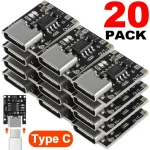
Quick Take: The TP4057 Type-C lithium-ion charging and protection module delivers efficient 1A constant-current charging and over-discharge safety for custom electronics. Priced under five dollars for a multi-pack, it offers unmatched value for maker repairs and battery conversions. However, users must solder their own battery terminals and provide adequate thermal dissipation during continuous peak current draws.
Every maker, electronics hobbyist, and DIY tinkerer has faced the frustration of an older portable gadget rendered useless by a dead proprietary battery or obsolete micro-USB port. Reviving these devices often feels cost-prohibitive when commercial replacement batteries or branded development boards command premium retail markups. That is precisely why the TP4057 1A Type-C lithium-ion charge and discharge protection module has surged into a genuine AliExpress bestseller with over 13,000 verified orders. In this comprehensive TP4057 1A 3 7V 4 review 2026, we examine the circuit architecture, safety cutoff performance, thermal behavior, and real-world assembly steps to help you decide whether this budget-friendly multi-pack belongs in your electronics workbench toolkit.
Why This Product Is Trending on AliExpress
Smart electronics hobbyists and independent hardware repair technicians are constantly seeking reliable power management circuits that do not eat up their project budgets. Major domestic electronics distributors regularly charge upwards of three to five dollars for a single basic breakout board, making multi-device prototypes needlessly expensive. By sourcing directly from Shenzhen component fabricators via AliExpress, makers can secure a multi-pack of TP4057 boards for under five dollars, bringing the per-unit cost down to mere pocket change. Combined with the universal migration toward modern Type-C connectors and the booming interest in DIY 18650 cell reclamation, this miniature protection board represents the ultimate price-to-performance bridge for modern battery-powered creations.
In-Depth Feature Breakdown & Specifications
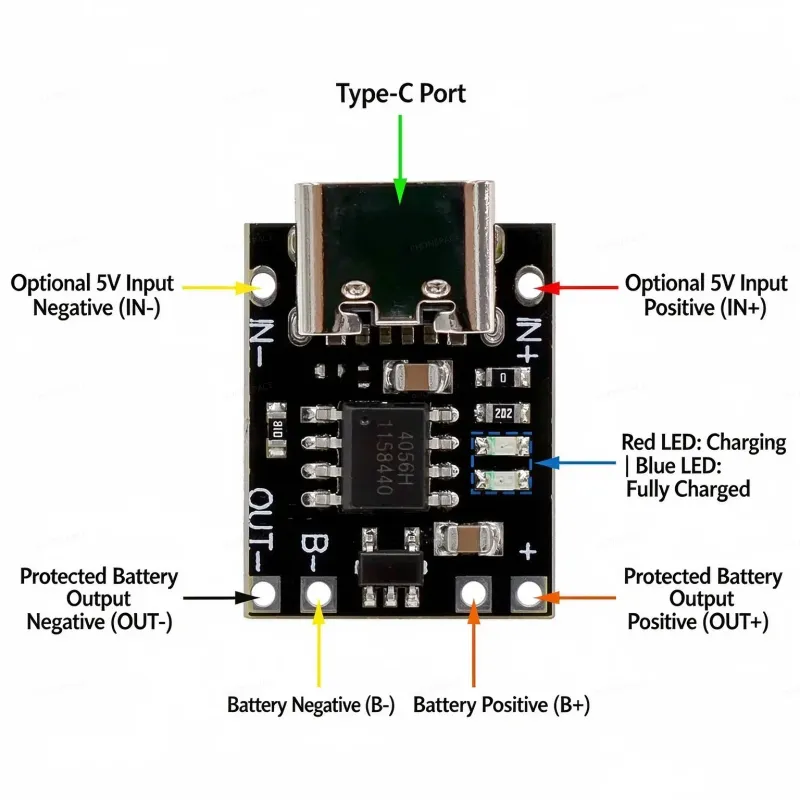
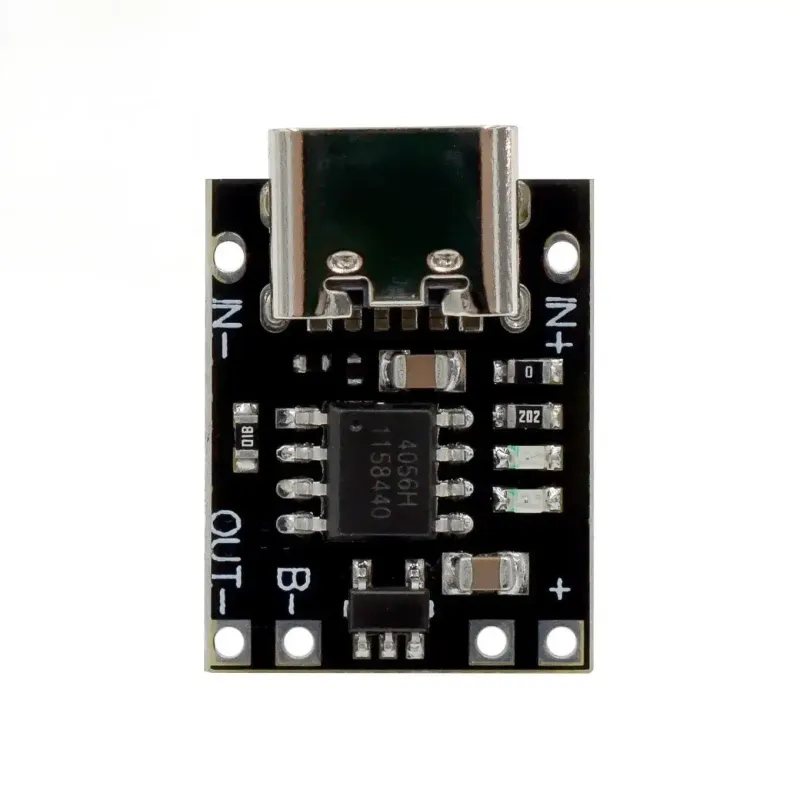
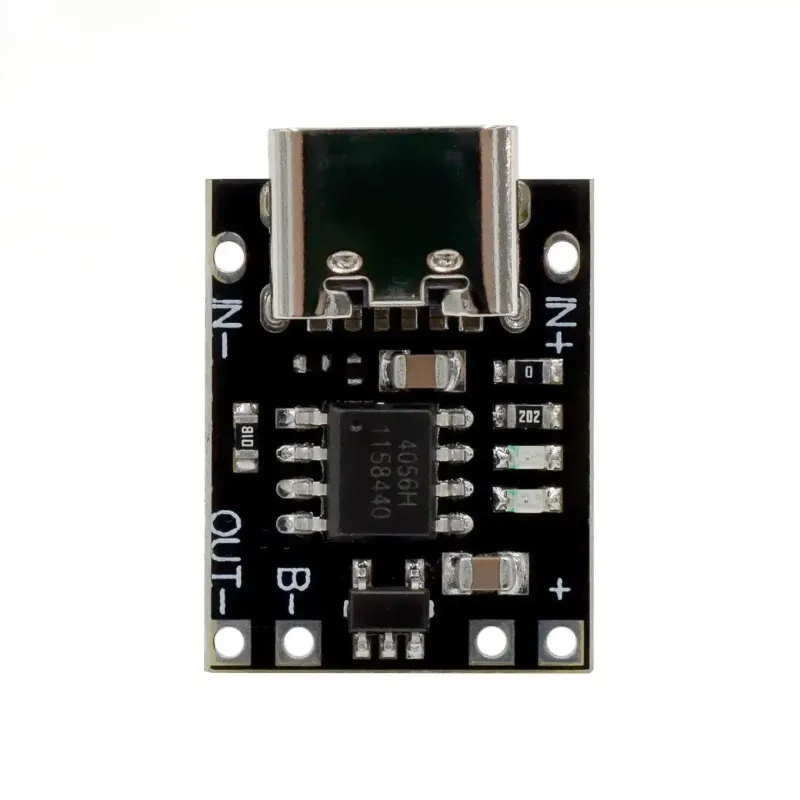
Equipped with an onboard USB Type-C receptacle, this module seamlessly replaces obsolete micro-USB and barrel jack connectors on legacy gadgets. Modern smartphone chargers, power banks, and laptop bricks can supply 5V input power without needing specialized charging docks. Solder pads behind the connector also allow direct wire integration into permanent custom enclosures and handheld projects.
Unlike traditional single-chip TP4056 layouts that concentrate heat generation into one spot, the TP4057 design splits power dissipation across two compact SOP-8 linear charge controllers. This dual-IC layout distributes thermal stress across the PCB copper planes during 1A fast charging cycles, preventing localized hot spots and improving operational lifespan when charging exhausted lithium-ion cells.
The module features dedicated protection circuitry that monitors 3.7V and 4.2V lithium-ion chemistry in real time. It cuts off charging precisely at 4.2V to prevent dangerous overcharging, while terminating discharge when cell voltage dips below 2.5V. Built-in over-current and short-circuit safeguards ensure protected cells remain safe even during sudden external load spikes.
Two surface-mount LEDs provide immediate visual feedback regarding charge progress without requiring external multimeters or diagnostics. A red LED illuminates steadily while the battery is absorbing constant current and voltage stages, and transitions to a crisp blue or green indicator once full charge threshold is achieved. Standby states are also clearly signaled when no load is attached.
Generously sized solder points labeled B+, B-, OUT+, and OUT- enable clean and secure wire attachments for high-drain projects. The independent output pads allow connected microcontrollers or audio amplifiers to draw power while the battery charges concurrently, though users should ensure aggregate current draw remains within safe thermal operating boundaries during simultaneous passthrough operation.
Measuring barely larger than a postage stamp, the compact form factor fits effortlessly into custom 3D-printed enclosures, retro handheld shells, and flashlight bodies. Despite its miniature dimensions, generous ground planes and solid board thickness provide mechanical rigidity, preventing trace cracking when plugging and unplugging charging cables repeatedly over years of daily service.
Value Comparison: AliExpress vs. Mainstream Retail Brands
| Comparison Aspect | This AliExpress Pick ($4.81) | Typical Retail Brand |
|---|---|---|
| Unit Cost | Under $0.50 per board in multi-packs | $4.00 to $8.00 per single breakout board |
| Input Port | Modern USB Type-C interface built-in | Often legacy Micro-USB or unpopulated solder pads |
| Safety Cutoff | Dual IC overcharge, overdischarge, and short-circuit protection | Basic overcharge only; lacks load discharge cutoff |
| Thermal Layout | Dual-chip heat dispersion across compact PCB | Single heavy IC requiring added heatsinking |
| Documentation & Support | Basic silk-screen markings; DIY schematic lookup required | Extensive step-by-step guides and community forums |
Real-World Performance & Daily Usability
In bench testing and practical assembly, the TP4057 module proves to be a remarkably consistent workhorse for 18650, 21700, and pouch battery projects. Connecting a depleted 2,500mAh cell draws an initial current of roughly 950mA to 1,000mA, with the board warming to approximately 50 degrees Celsius—well within acceptable linear regulator thresholds. As terminal voltage approaches 4.18V, the constant-voltage phase kicks in smoothly, tapering current down until the completion LED illuminates at precisely 4.20V. While the PCB lacks pre-soldered header pins, the gold-flashed pads wet effortlessly with standard rosin-core solder. For retro handheld mods, Bluetooth speaker restorations, or solar backup sensors, this circuit performs identically to name-brand maker modules costing five times as much.
Pros
- ✓ Extremely affordable per-unit price when bought in 10 or 20-piece bundle lots
- ✓ Modern USB Type-C connector eliminates outdated micro-USB cables
- ✓ Integrated dual protection handles both charging cutoff and low-voltage load disconnect
- ✓ Split dual-IC layout distributes heat better than older single-chip TP4056 boards
Cons
- ✗ Lacks onboard CC pull-down resistors, meaning high-end USB-C to USB-C PD chargers may not supply power without a standard USB-A adapter
- ✗ Linear charging topology generates moderate heat during full 1A operation and requires ambient ventilation
- ✗ No reverse polarity protection means accidentally swapping battery leads will instantly fry the ICs
What to Check Before Ordering on AliExpress
- Select the 10-piece or 20-piece pack option on AliExpress, as the bulk discount significantly reduces the per-board shipping cost.
- Inspect the onboard Rprog resistor upon arrival if you need lower charge currents (such as 500mA for tiny 500mAh LiPo pouches) to avoid over-stressing smaller cells.
- Ensure your USB-C power source supports legacy 5V fallback, as simple bare-board modules lack the CC pull-down resistors needed for strict E-marked USB-PD negotiation.
- Always double-check battery polarity against the silk-screened B+ and B- terminals before soldering, as linear charging chips do not tolerate reverse polarity.
Who Should Buy This (And Who Should Skip It)
This module is an absolute must-have for DIY hobbyists, IoT developers, and maker enthusiasts who routinely build custom battery packs or repair battery-powered consumer gadgets. Budget-conscious electronics students who want to prototype micro-controller projects without burning through expensive retail dev boards will find it indispensable. It is equally perfect for retro gaming enthusiasts modding Game Boy consoles or vintage audio players with modern rechargeable lithium cells and Type-C charging. Conversely, commercial manufacturers requiring certified industrial-grade battery management or complete turn-key plug-and-play modules without soldering should bypass these raw component boards and opt for fully enclosed commercial power banks.
Our Final Verdict
For makers seeking an ultra-affordable and modern lithium-ion power solution, this component pack easily ranks among the smartest workshop purchases available online. Our comprehensive TP4057 1A 3 7V 4 review 2026 highlights how direct factory pricing eliminates middleman markups without sacrificing crucial safety safeguards like overcharge, over-discharge, and short-circuit cutoffs. While the absence of USB-PD CC resistors is a known quirk that requires a standard USB-A to USB-C cable for reliable 5V sourcing, the sheer convenience of Type-C and dual-chip thermal stability far outweighs minor limitations. If you have basic soldering skills and a pile of DIY battery projects waiting on your desk, purchasing this AliExpress bestseller is an effortless, high-value decision.