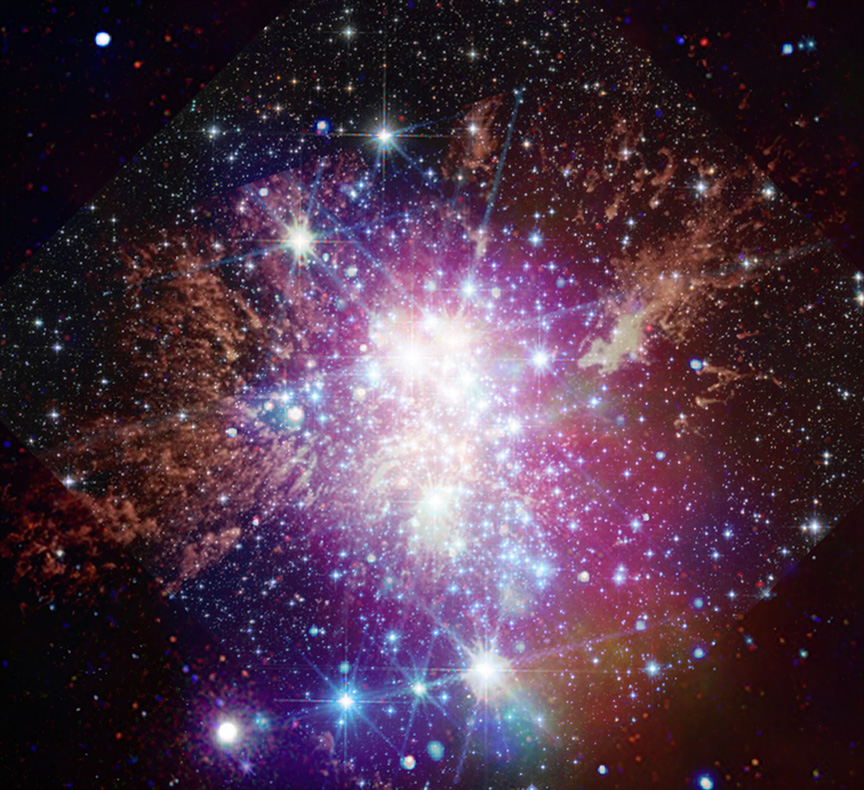
An Eye-catching Star Cluster: A Deep Dive into Westerlund 1
Did you know that hidden within the vast expanse of the Milky Way lies a celestial jewel, a dazzling collection of stars known as Westerlund 1? This super star cluster, unlike any other in our galactic neighborhood, presents astronomers with a unique opportunity to study the lives and deaths of massive stars in an extraordinarily dense environment. Join us as we peel back the layers of cosmic dust and gas to unveil the secrets of Westerlund 1, a cosmic laboratory brimming with stellar wonders.
🏆 Find Best ‘Eye-catching Star Cluster’ on AliExpress
* Discover top-rated items at AliExpress
Introduction: A Jewel in the Milky Way
Westerlund 1 isn’t just another cluster of stars; it’s a super star cluster. What does that even mean? Well, imagine the most spectacular family reunion, but instead of distant relatives, it’s hundreds of thousands of stars crammed into a space only a few light-years across. This proximity, combined with the cluster’s relatively young age (estimated at just a few million years), makes it an ideal target for astronomers eager to understand the early lives and rapid evolution of the most massive stars in the universe. Conveniently located roughly 15,000 light-years from Earth in the constellation Ara, Westerlund 1 is close enough for detailed observation, yet far enough to provide a comprehensive perspective on its overall structure and dynamics. It’s a cosmic pressure cooker of stellar evolution, where gravity, radiation, and magnetic fields collide in a spectacular display.
To study this amazing locale, astronomers have employed a powerful instrument: the Chandra X-ray Observatory. This orbiting telescope, named after the legendary astrophysicist Subrahmanyan Chandrasekhar, is specifically designed to detect X-ray emission from celestial objects. These X-rays, often blocked by Earth’s atmosphere, reveal energetic processes happening within Westerlund 1, allowing us to peer through the obscuring dust and gas that would otherwise hide the cluster’s vibrant activity.
- Chandra plays a pivotal role in observing X-ray emissions.
- It reveals the activity and dynamics of the cluster, including binary star systems and stellar winds.
- Chandra has detected thousands of individual stars emitting X-rays within Westerlund 1.
What is Westerlund 1? Unpacking a Super Star Cluster
Let’s take a step back. What is a star cluster, anyway? Star clusters are essentially groups of stars that were born from the same giant molecular cloud. They’re cosmic siblings, sharing a common origin and moving through space together. There are two main types: open clusters and globular clusters. Open clusters, like the Pleiades (the Seven Sisters), are relatively young, loosely bound, and contain a few hundred to a few thousand stars. Globular clusters, on the other hand, are ancient, tightly packed spheres containing hundreds of thousands, or even millions, of stars. Think of them as stellar metropolises, teeming with ancient suns.
So, where does Westerlund 1 fit in? It’s neither! That’s why it’s called a super star cluster. Westerlund 1 possesses a density and stellar population more akin to that of a globular cluster, but with a much younger age, similar to an open cluster. This unusual combination makes it a rare and valuable astronomical object. Its stellar density approaches that of globular clusters, while its age mirrors the relatively youthful open clusters.
Westerlund 1 is estimated to be only a few million years old, a blink of an eye in cosmic terms. It contains hundreds of thousands of stars, many of which are among the most massive and luminous known. These stellar behemoths burn through their fuel at an astonishing rate, leading to dramatic and relatively short lifespans. The cluster’s location within the Milky Way, near the galactic plane but somewhat obscured by intervening dust and gas, adds to the challenge of studying it, but also to the excitement of discovery. Think of it as trying to study a bustling city through a smoky window – the tantalizing glimpses make the discoveries all the more rewarding.
| ✅ Pros | ❌ Cons |
|---|---|
| Relatively close to Earth for detailed study | Obscured by dust and gas in the galactic plane |
| High concentration of massive stars provides valuable data on stellar evolution | Relatively young age means its long-term evolution is yet to be observed |
| Unique stellar population unlike typical open or globular clusters | Distance still poses challenges for resolving individual stars and their properties |
Unveiling Westerlund 1: A Brief History of Discovery
The story of Westerlund 1 begins with Swedish astronomer Bengt Westerlund, who identified the cluster in 1961. Westerlund, working from the Uppsala Southern Station in Australia, meticulously surveyed the southern skies, cataloging various celestial objects. His keen eye spotted a dense grouping of stars in the constellation Ara, which he initially classified as a highly reddened open cluster. He painstakingly observed and documented these celestial objects, setting the stage for future discoveries.
Application: It wasn’t until much later, with the advent of more powerful telescopes and sophisticated astronomical techniques, that the true nature of Westerlund 1 was revealed. The extreme reddening observed by Westerlund was due to the significant amount of interstellar dust lying between Earth and the cluster. This dust absorbs and scatters blue light more effectively than red light, causing the cluster’s stars to appear much redder than they actually are. The “reddening” effect is similar to how sunsets appear redder due to the scattering of sunlight by the atmosphere.
Implication: As technology advanced, astronomers were able to correct for this interstellar extinction, revealing the intrinsic brightness and properties of the cluster’s stars. This led to the realization that Westerlund 1 was not just another open cluster, but a super star cluster, harboring an exceptionally large population of massive stars. This realization triggered a flurry of research aimed at understanding its unique characteristics.
The History of Cluster Study: A Celestial Census
The study of star clusters dates back to antiquity, with ancient civilizations recognizing and cataloging bright open clusters like the Pleiades. The Pleiades, easily visible to the naked eye, have been featured in the mythology and folklore of cultures worldwide. However, it was the invention of the telescope in the 17th century that truly revolutionized our understanding of these celestial groupings. Astronomers like Charles Messier meticulously cataloged clusters and nebulae, initially to avoid confusing them with comets. As telescopes improved, astronomers could resolve individual stars within clusters, leading to detailed studies of their properties and distribution. William Herschel, in the 18th century, conducted extensive surveys of the sky, discovering numerous star clusters and nebulae, and paving the way for statistical studies of their distribution.
The 20th century brought advancements in spectroscopy and photometry, allowing for precise measurements of stellar temperatures, luminosities, and chemical compositions. These observations provided critical insights into stellar evolution and the formation of star clusters. The development of the Hertzsprung-Russell diagram, mentioned earlier, was a crucial step in understanding the life cycle of stars. Today, space-based observatories like Chandra and the Hubble Space Telescope provide unparalleled views of star clusters across the electromagnetic spectrum, revealing their hidden secrets and pushing the boundaries of our knowledge. Future telescopes, like the James Webb Space Telescope and the Extremely Large Telescope, will further enhance our ability to study star clusters in unprecedented detail.
Chandra’s X-Ray Vision: Peering Through the Cosmic Dust
The Chandra X-ray Observatory is a game-changer when it comes to studying Westerlund 1. Traditional optical telescopes are limited by the intervening dust and gas that obscure our view of the cluster. However, X-rays can penetrate this cosmic smog, revealing the hidden activity within. Chandra detects X-ray emission produced by incredibly hot gas, energetic particles, and intense magnetic fields. These emissions often originate from binary star systems, where two stars are locked in a tight orbital dance, or from powerful stellar winds blasting off the surfaces of massive stars. It’s like having X-ray vision, allowing us to see through the obstacles that block visible light.
X-Ray Binaries: A Dance of Destruction and Creation
Binary star systems, where one star siphons material from its companion, can produce intense X-ray flares as the material crashes onto the surface of the accreting star. These flares provide valuable information about the properties of the stars and the dynamics of the binary system. These events light up Chandra’s detectors, providing a detailed look at the accretion process. The X-ray emission is often concentrated in regions where the material impacts the surface of the accreting star, creating “hot spots” that can be incredibly bright.
Stellar Winds: Galactic Gales
Massive stars, on the other hand, generate strong stellar winds that collide with the surrounding interstellar medium, creating shock waves and heating the gas to millions of degrees, resulting in X-ray emission. These winds are instrumental in shaping the surrounding environment and can even trigger star formation in nearby molecular clouds. The shock waves generated by stellar winds can compress and heat the surrounding gas, leading to the formation of new stars.
Chandra’s observations of Westerlund 1 have revealed thousands of individual stars emitting X-rays, painting a picture of a dynamic and energetic environment. By analyzing the X-ray spectra, astronomers can determine the temperatures, densities, and compositions of the emitting gas, providing clues about the physical processes at play within the cluster. The X-ray spectra can also reveal the presence of heavy elements, providing insights into the nucleosynthesis processes occurring within the stars.
Stellar Evolution in Westerlund 1: A Cosmic Laboratory
Westerlund 1 is a treasure trove for studying stellar evolution, particularly for massive stars. These behemoths live fast and die young, burning through their nuclear fuel in a fraction of the time compared to smaller, sun-like stars. The cluster provides a snapshot of stellar evolution in action, allowing astronomers to observe stars at different stages of their lives and test theoretical models. It is a natural laboratory for understanding the final stages of stellar evolution and the formation of compact objects like neutron stars and black holes.
The Stellar Nursery: Birth of Giants
Star formation within Westerlund 1 likely occurred in a relatively short burst, leading to a population of stars with similar ages but varying masses. The most massive stars evolve rapidly, quickly becoming red supergiants, swollen giants on the verge of dramatic demise. Others may become Wolf-Rayet stars, hot, luminous stars that have shed their outer layers, revealing their hot, helium-rich cores. And then there are the truly exotic objects, like magnetars, neutron stars with incredibly strong magnetic fields. The presence of these diverse stellar types makes Westerlund 1 a valuable testbed for stellar evolution theories.
- Star formation within Westerlund 1 occurred in a relatively short burst.
- Massive stars quickly evolve into red supergiants.
- Others may become Wolf-Rayet stars, shedding their outer layers.
These objects serve as a cosmic laboratory for researchers. The diverse population provides a range of observational data points for testing and refining stellar evolution models.
| ✅ Pros | ❌ Cons |
| ———– | ———– |
| Provides a diverse sample of stars at different evolutionary stages | Relatively short lifespan of massive stars makes long-term observation challenging |
| High density of stars allows for studying interactions and collisions | Determining the precise ages and masses of individual stars can be difficult |
| X-ray emission reveals energetic processes and hidden activity within the cluster | Dust and gas obscuration can still limit visibility in certain regions |
The History of Evolutionary Theory: From Hertzsprung-Russell to Westerlund 1
The understanding of stellar evolution is a cornerstone of modern astrophysics. It started with the realization that stars are not immutable objects but rather undergo changes throughout their lifetimes. Early 20th-century astronomers like Ejnar Hertzsprung and Henry Norris Russell developed the Hertzsprung-Russell (H-R) diagram, which plots the luminosity of stars against their temperature. This diagram revealed distinct patterns and groupings of stars, providing the first observational evidence for stellar evolution. The H-R diagram revealed that stars are not randomly distributed in terms of luminosity and temperature, but rather fall into distinct regions, such as the main sequence, red giant branch, and white dwarf region.
Theoretical work by Arthur Eddington and others established that stars generate energy through nuclear fusion in their cores, providing the mechanism for their long lifespans. Eddington’s work demonstrated that the energy output of stars could be explained by the conversion of hydrogen into helium through nuclear fusion reactions. As our understanding of nuclear physics grew, so did our ability to model the internal structure and evolution of stars. Today, sophisticated computer simulations allow us to track the complex processes that govern stellar evolution, from their birth in giant molecular clouds to their eventual demise as white dwarfs, neutron stars, or black holes. Westerlund 1 is just one of many sites that tests these theories.
The Exotic Inhabitants: A Rogues’ Gallery of Stellar Oddities
Westerlund 1 is home to a menagerie of exotic stars, each with its unique characteristics and evolutionary history. The sheer density of extreme stars is one of its defining characteristics. These stellar oddities challenge our understanding of stellar physics and provide clues to the extreme conditions present in the cluster.
Red Supergiants: Behemoths on the Brink
Red supergiants, like the aptly named W26, are among the largest stars in the universe, with diameters hundreds or even thousands of times that of the Sun. These stars are in the final stages of their lives, having exhausted the hydrogen fuel in their cores and beginning to fuse heavier elements. W26 is particularly notable for its unusual nebula, suggesting significant mass loss. The nebula surrounding W26 is thought to be formed by the star’s intense stellar winds, which eject large amounts of material into space.
Wolf-Rayet Stars: Stripped and Speeding
Wolf-Rayet stars are another type of massive star found in Westerlund 1. These stars are incredibly hot and luminous, with strong stellar winds that eject large amounts of mass into space. They represent a late stage in the evolution of massive stars, just before they explode as supernovae. Their spectra are characterized by broad emission lines, indicative of the high velocities of the ejected material. Wolf-Rayet stars are important contributors to the chemical enrichment of the interstellar medium, as they release heavy elements produced in their cores during their final stages of life.
Yellow Hypergiants: Rare and Restless
Yellow hypergiants, though not as numerous, are also present. These are extremely rare and luminous stars experiencing rapid mass loss and instability. Their presence indicates a cluster with very recent star formation. They are among the brightest stars known, but also among the most unstable. Their luminosity makes them visible at great distances, but their short lifespans make them relatively rare.
The presence of these rare and massive stars in Westerlund 1 challenges our understanding of stellar evolution. It suggests that the conditions within the cluster favored the formation of these extreme objects, or that our current models of stellar evolution need to be refined to account for their existence. It raises questions about the initial mass function (IMF) in Westerlund 1, which describes the distribution of stellar masses at birth.
A Dynamic Environment: Interactions, Collisions, and Galactic Cannibalism
The high density of stars in Westerlund 1 creates a dynamic and chaotic environment. Gravitational interactions between stars are common, and close encounters can alter their orbits and even lead to collisions. This cosmic ballet is a constant tug-of-war. The gravitational interactions can also eject stars from the cluster, leading to a gradual decrease in the cluster’s mass over time.
Stellar Collisions: A Cosmic Car Crash
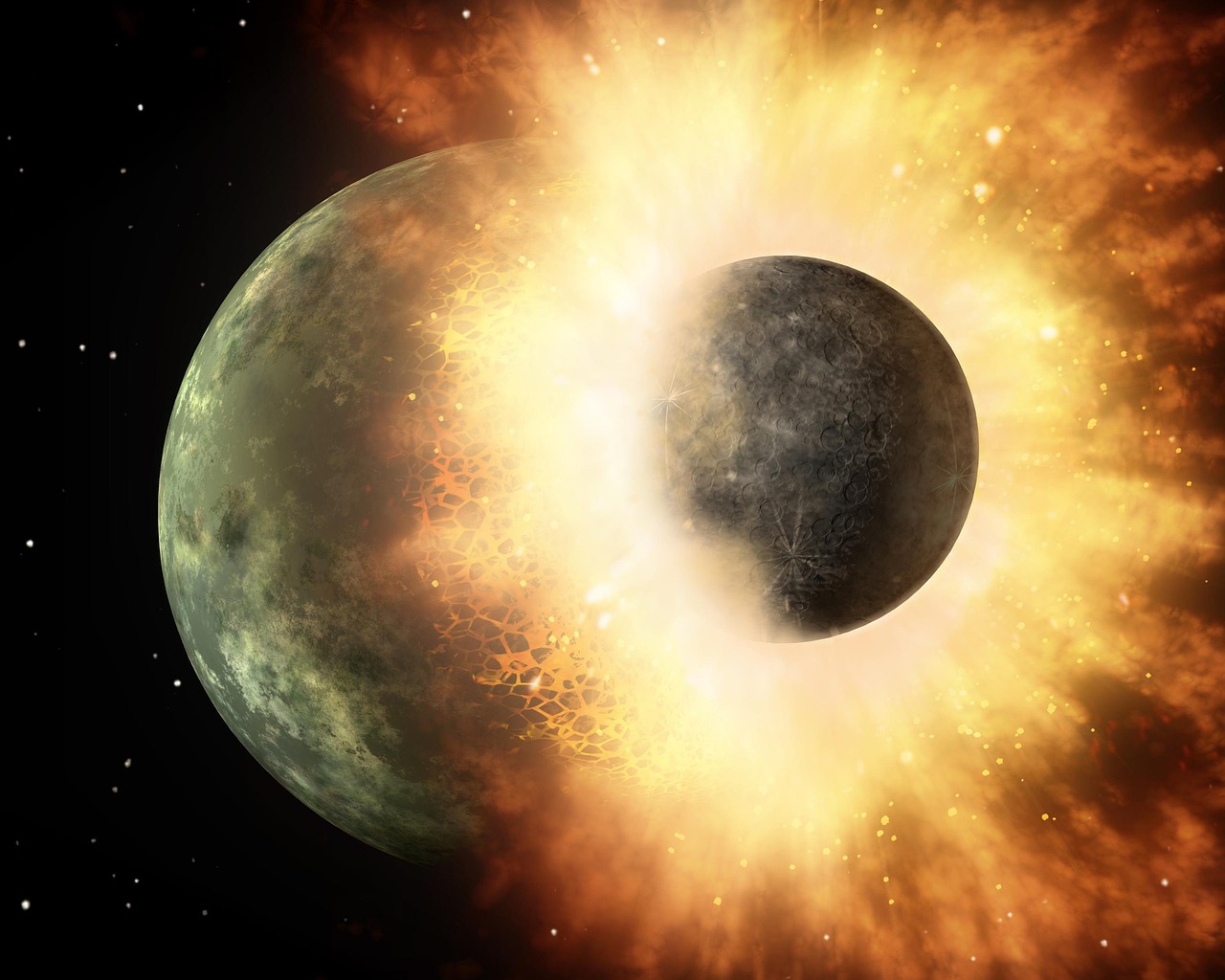
Stellar collisions, though rare, can have a significant impact on stellar evolution. When two stars collide, they merge to form a single, more massive star. This merger can trigger a burst of star formation or lead to the formation of unusual stellar objects. These events can release enormous amounts of energy, observable across the electromagnetic spectrum. The merged star may have a different chemical composition and evolutionary path than either of the original stars.
Gravitational Dynamics: The Cluster’s Heartbeat
The gravitational interactions within Westerlund 1 also influence the overall dynamics and stability of the cluster. The cluster’s core is likely to be more densely packed than its outer regions, and the stars in the core are subject to stronger gravitational forces. This leads to a process called mass segregation, where more massive stars sink towards the center of the cluster, while less massive stars are found in the outer regions. Mass segregation can also lead to the formation of a central black hole in the cluster, as massive stars migrate towards the center and eventually collapse.
| ✅ Pros | ❌ Cons |
|---|---|
| High stellar density increases the likelihood of observable stellar interactions and collisions | Difficulty in tracking individual stars due to the high density |
| Gravitational interactions contribute to the cluster’s overall dynamics and evolution | Potential for disruptive events like supernovae to destabilize the cluster |
| Stellar collisions can lead to the formation of unusual stellar objects | Hard to isolate the effects of stellar collisions from other evolutionary processes |
Black Hole Potential and Comparisons to Other Clusters
Given its density and the presence of massive stars, Westerlund 1 is a prime candidate for the formation of intermediate-mass black holes (IMBHs). These black holes, larger than stellar-mass black holes but smaller than supermassive black holes, are theorized to form through the mergers of smaller black holes or the direct collapse of massive stars in dense environments. The intense gravitational interactions within the cluster could facilitate the merging of smaller black holes, leading to the formation of an IMBH.
Comparing Westerlund 1 to other notable clusters provides context for its unique characteristics. The Arches cluster, located near the Galactic center, is another young, dense star cluster with a similar stellar population. However, Westerlund 1 is thought to be more massive and contain a greater number of massive stars. R136, located in the Large Magellanic Cloud, is another example of a super star cluster. This cluster contains a large number of O-type stars, the hottest and most luminous stars known. These comparisons highlight the rarity and significance of Westerlund 1 as a cosmic laboratory.
Future Prospects: Unveiling More Secrets with Next-Generation Telescopes
The study of Westerlund 1 is far from over. Future research directions include using next-generation telescopes, such as the James Webb Space Telescope and the Extremely Large Telescope, to obtain even more detailed observations of the cluster. These telescopes will offer unprecedented views of the cluster, allowing astronomers to probe its secrets in greater detail than ever before.
James Webb Space Telescope: Infrared Vision
The James Webb Space Telescope, with its unprecedented infrared sensitivity, will be able to peer even deeper through the dust and gas that obscure Westerlund 1, revealing the faintest and most distant stars. This will allow astronomers to study the cluster’s stellar population in greater detail and to probe the conditions under which these stars formed. The infrared observations will be particularly useful for studying the dust and gas surrounding the stars, providing insights into the star formation process.
Extremely Large Telescope: Unprecedented Resolution
The Extremely Large Telescope, with its massive collecting area, will provide incredibly sharp images of the cluster, allowing astronomers to resolve individual stars and study their properties in detail. This will enable them to measure the stars’ temperatures, luminosities, and chemical compositions with unprecedented precision, providing new insights into their evolutionary histories. The ELT’s high resolution will also allow astronomers to study the dynamics of the cluster in greater detail, tracking the motions of individual stars and measuring their velocities.
These future observations promise to uncover even more secrets about stellar evolution, star formation, and the dynamics of star clusters. Westerlund 1 will continue to be a valuable resource for advancing our understanding of the universe for many years to come. It will serve as a benchmark for testing and refining our theories of stellar evolution and cluster dynamics.
Conclusion: Westerlund 1 – A Cosmic Rosetta Stone
Westerlund 1 stands as a testament to the power of astronomical observation and the ever-evolving understanding of our universe. From its initial discovery by Bengt Westerlund to the detailed X-ray studies by the Chandra Observatory, this super star cluster has challenged and enriched our knowledge of stellar evolution, star formation, and the dynamic processes within dense stellar environments. As we look forward to future observations with next-generation telescopes, Westerlund 1 promises to remain a captivating subject of study, offering new insights into the lives and deaths of massive stars and the formation of these extraordinary celestial groupings. It’s more than just a collection of stars; it’s a cosmic Rosetta Stone, helping us to decipher the complex language of the universe, unlocking the secrets of stellar evolution and the dynamics of star clusters.
📚 You might also like:
- REVIEWHAVENIC Stars
- WELLNESSHUBHubble Seeks Clusters in ‘Lost Galaxy’
- MAXINFOMassive Stars Make Their Mark in Hubble Image


