황금빛 먼지 속에서 피어나는 별: 빛나는 피스미스 24의 새로운 모습 (A Star Blooming in Golden Dust: The New Look of Shining Pismis 24)
Did you know that a celestial nursery, shimmering with the promise of new suns, is being unveiled in unprecedented detail by the James Webb Space Telescope? Today, we delve into the mesmerizing realm of 빛나는 피스미스 24 (Shining Pismis 24), a stellar birthplace nestled within the expansive NGC 6357 nebula, and explore how the revolutionary James Webb Space Telescope (JWST) is transforming our understanding of star formation. This isn’t just about pretty pictures; it’s a journey into the fundamental processes that shape our universe, a universe we are only now beginning to truly see. Prepare to be amazed as we explore this golden cloud and its secrets.
🏆 Find Best ‘Shining Pismis’ on AliExpress
* Discover top-rated items at AliExpress
서론: 피스미스 24 성운과 제임스 웹 우주 망원경 (Introduction: Pismis 24 Nebula and the James Webb Space Telescope)
Pismis 24, located approximately 8,000 light-years away in the constellation Scorpius, is a young open cluster deeply embedded within the diffuse emission nebula NGC 6357. Imagine a bustling city teeming with life – this region is a hotbed of stellar activity, brimming with massive, luminous stars and dense clouds of gas and dust – the very ingredients for creating new stars. Its discovery dates back to 1959, named after the astronomer Paris Pişmiş, who cataloged numerous nebulae and star clusters. Initially, Pismis 24 was thought to house some of the most massive stars known, including Pismis 24-1, even being considered a single behemoth dwarfing our own sun. However, later, more refined observations revealed it to be a tightly bound multiple star system, a cosmic family residing together. The new observations from JWST have not only refined our understanding of the individual stars within Pismis 24, but have also provided invaluable insights into the environment in which these stars are born, revolutionizing our perception of stellar birthplaces.
The James Webb Space Telescope (JWST), a collaborative endeavor between NASA, ESA, and CSA, represents the apex of astronomical technology. Think of it as the ultimate cosmic detective, equipped with cutting-edge tools to unravel the universe’s mysteries. It is the largest, most powerful, and most complex space telescope ever constructed, specifically designed to observe the universe in infrared light. This infrared observation capability is crucial because it allows us to peer through the dense veils of dust that obscure visible light, offering a direct view into the heart of star-forming regions like Pismis 24. JWST’s ability to see through the dust is akin to possessing X-ray vision for the cosmos, revealing secrets hidden for billions of years. The journey to creating JWST was a decades-long odyssey, involving thousands of scientists and engineers relentlessly pushing the boundaries of materials science, optics, and cryogenic technology. Imagine the sheer ingenuity required to build a telescope that can operate at temperatures close to absolute zero, all while orbiting a million miles away from Earth!
JWST’s observation of Pismis 24 is driven by the desire to understand the early stages of star formation, the intricate processes by which stars ignite within these nebulae, and the complex interplay between newborn stars and their environment. Think of it as studying the earliest days of a city’s construction, examining the blueprints and laying the foundation for understanding its future growth. By studying 빛나는 피스미스 24 in detail, scientists hope to gain insights into the conditions that lead to the formation of massive stars, which play a vital role in the evolution of galaxies. The ultimate goal is to unlock the secrets behind the cosmic recipe that creates stars, the fundamental building blocks of the universe. This involves not only understanding the physics of star formation but also the chemical evolution of the interstellar medium, the raw material from which stars are born. The impact of these studies extends far beyond the realm of astronomy, providing insights into the origins of elements and the potential for life to arise in other parts of the universe.
웹 망원경으로 촬영한 피스미스 24의 이미지 분석 (Analysis of Pismis 24 Images Taken by the Webb Telescope)
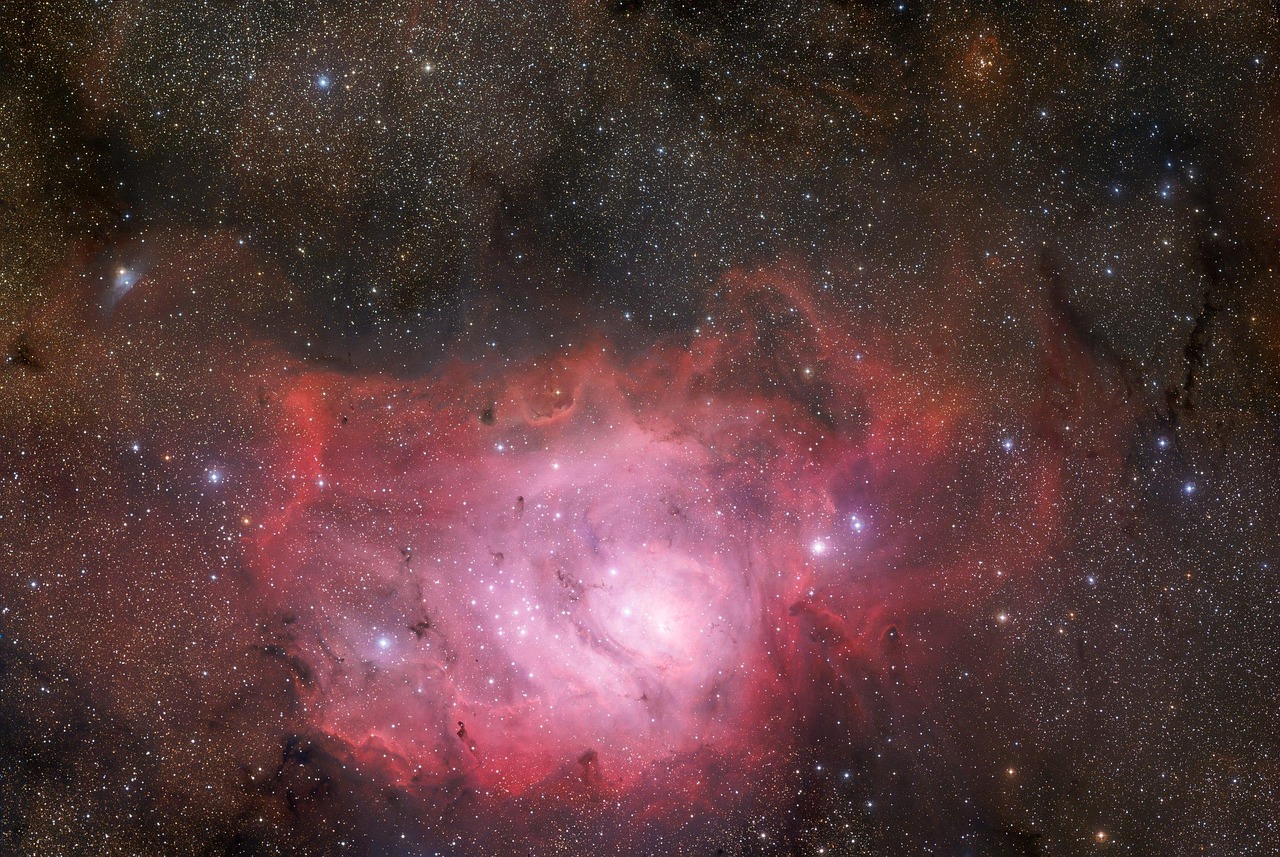
The images of Pismis 24 captured by JWST are, to put it simply, breathtaking. They reveal intricate structures of dust and gas, illuminated by the intense radiation of the young stars embedded within. The images showcase the raw energy of star birth, a spectacle previously hidden from our view. It’s like witnessing the birth of a star city, complete with swirling clouds and dazzling lights.
The most striking feature is the pervasive glow of 황금색 (gold) and 주황색 (orange) hues. But these colors are not merely aesthetic; they represent the emission from heated dust grains. Imagine tiny specks of gold dust, heated by an immense cosmic fire, emanating a warm, inviting glow. These grains are composed of silicates, carbon compounds, and other materials heated by the intense radiation from the young, massive stars within 빛나는 피스미스 24. The intensity of the colors directly correlates with the temperature and density of the dust, providing a map of the energy distribution within the nebula. The denser, brighter regions are where stars are actively forming, while the dimmer areas represent more diffuse gas and dust. By analyzing the colors, scientists can determine which areas are the most active sites of star formation.
Comparing JWST images to previous observations from telescopes like Hubble reveals the quantum leap in detail and clarity. Hubble, primarily observing in visible light, offered glimpses of the outer layers of Pismis 24. It was like observing the city from afar, only catching the glimpses of its tallest buildings. In contrast, JWST’s infrared vision pierces through the obscuring dust, revealing the inner workings of the star-forming region. Where Hubble saw fuzzy patches, JWST unveils intricate filaments, cavities carved out by stellar winds, and the nascent cores of new stars. It’s as if JWST is equipped with a powerful microscope, allowing us to zoom in and examine the intricate details of this stellar nursery. The difference is akin to trying to understand a forest by only seeing the leaves on the outermost trees, versus being able to see the entire ecosystem, from the roots to the canopy. We can now see the individual stars being born, the gas clouds collapsing, and the entire process of star formation unfolding before our very eyes.
Consider the following comparison of capabilities:
- Hubble Space Telescope (HST): Primarily visible and ultraviolet light. Good for surface details and general morphology. Decades of legacy data provide a valuable historical context for understanding the evolution of astronomical objects.
- James Webb Space Telescope (JWST): Primarily infrared light. Excellent for penetrating dust, revealing hidden structures and temperatures. Higher resolution allows for a more detailed examination of these structures.
| ✅ Pros | ❌ Cons | |
|---|---|---|
| Hubble (Visible) | High resolution in visible light, long operational history, large archive of data. | Limited ability to penetrate dust, limited infrared capabilities. |
| JWST (Infrared) | Excellent dust penetration, high sensitivity, can observe cooler objects, reveals previously unseen details. | Relatively new, shorter operational timeframe, more susceptible to space weather. |
별 탄생 메커니즘과 피스미스 24 (Star Birth Mechanism and Pismis 24)
The formation of stars is a complex process driven by gravity, a fundamental force shaping our universe. It starts with a 분자 구름 (molecular cloud), a vast region of cold, dense gas and dust. These clouds are not uniform; they contain regions of higher density, like pockets of intense activity. Gravity pulls the material in these denser regions inward, causing them to collapse. Imagine a snowball rolling down a hill, gathering more and more snow as it goes – the same principle applies to the collapse of a molecular cloud. Within Pismis 24, these molecular clouds are particularly dense, making it a fertile ground for star formation. These dense clouds contain various elements, including hydrogen, helium, and trace amounts of heavier elements like carbon and oxygen.
As the cloud collapses, it heats up due to the conversion of gravitational potential energy into kinetic energy. This process is known as 중력 수축 (gravitational contraction). As the temperature increases, the atoms inside the cloud move faster and collide more frequently. Think of it like rubbing your hands together – the friction generates heat. Eventually, the core of the collapsing cloud becomes hot and dense enough to ignite 핵융합 (nuclear fusion). This is when hydrogen atoms fuse to form helium, releasing tremendous amounts of energy in the process. A star is born! The energy released during nuclear fusion creates immense pressure that counteracts the force of gravity, stabilizing the star and preventing it from collapsing further.
Pismis 24 is a prime example of a 별 탄생의 요람 (stellar nursery). It provides the perfect conditions for star formation: a dense molecular cloud, an abundance of gas and dust, and the presence of massive stars whose radiation can trigger further collapse and star formation. It’s like a well-stocked kitchen, equipped with all the ingredients and tools needed to bake a cake. The massive stars within 빛나는 피스미스 24 play a crucial role by compressing the surrounding gas and dust, creating new regions of high density that can collapse to form stars. This process, known as triggered star formation, is believed to be a significant factor in the ongoing star formation activity in Pismis 24. The radiation from massive stars also ionizes the surrounding gas, creating glowing nebulae that are visible across vast distances.
The stars born in Pismis 24 are not all created equal. Some are relatively small and faint, like our Sun, destined to burn slowly and steadily for billions of years. Others are massive and luminous, burning through their fuel at an astonishing rate, living fast and dying young. These massive stars have short lifespans, ending their lives in spectacular supernova explosions, cosmic fireworks that illuminate the surrounding space. These explosions, in turn, enrich the surrounding interstellar medium with heavy elements, providing the raw materials for future generations of stars and planets. This cycle of star birth and death is the engine that drives the evolution of galaxies. The estimated evolutionary stage of the stars in Pismis 24 suggests that this region is still in a relatively early phase of star formation, with many more stars yet to be born. The intense radiation and stellar winds from these young stars also play a significant role in shaping the surrounding environment, creating the intricate structures observed in the JWST images. The stellar winds, streams of particles ejected from the stars, can sculpt the surrounding gas and dust, creating cavities and filaments that are visible in the JWST images.
웹 망원경의 중적외선 (MIRI) 관측 데이터의 중요성 (The Importance of MIRI Observation Data from the Webb Telescope)
One of the key instruments on JWST is the Mid-Infrared Instrument (MIRI). Imagine MIRI as a heat-sensing camera, capable of detecting the faint warmth emitted by distant objects in space. MIRI is designed to observe the universe in the 중적외선 (mid-infrared) range of the electromagnetic spectrum, which is particularly sensitive to the emission from cool dust and gas. This makes MIRI ideally suited for studying star-forming regions like Pismis 24. It allows us to see the heat signatures of the dust and gas clouds, revealing their temperature, density, and composition. The mid-infrared range is also particularly sensitive to the presence of polycyclic aromatic hydrocarbons (PAHs), complex organic molecules that are thought to play a role in the formation of stars and planets. These molecules are like cosmic building blocks, potentially playing a role in the emergence of life.
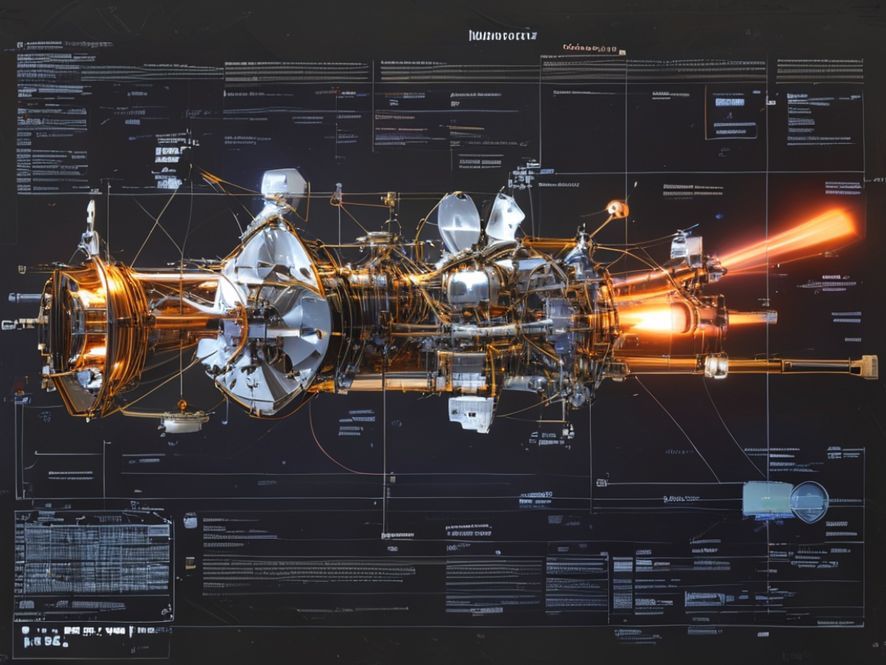
MIRI works by detecting the heat radiated by objects in space. It uses a series of mirrors and detectors cooled to extremely low temperatures (around -266 degrees Celsius) to minimize the instrument’s own thermal emission. Imagine trying to detect a faint flicker of candlelight in a brightly lit room – the only way to see it is to darken the room. Similarly, MIRI needs to be extremely cold to detect the faint infrared light from distant objects. This allows MIRI to detect the faint infrared light emitted by distant objects with unprecedented sensitivity. The cooling system is a marvel of engineering, relying on a complex network of cryocoolers and heat pipes to maintain the extremely low temperatures required for optimal performance. Without this sophisticated cooling system, MIRI would be overwhelmed by its own thermal radiation, rendering it unable to detect the faint signals from distant objects. The engineers who designed and built MIRI had to overcome incredible technical challenges to create this remarkable instrument.
MIRI data provides a wealth of information about the physical and chemical conditions within Pismis 24. It allows scientists to map the distribution of dust and gas, to measure the temperature of these materials, and to identify the chemical composition of the dust grains. Think of it as creating a detailed map of the nebula, showing the location of different elements and compounds. By analyzing the MIRI data, scientists can gain a deeper understanding of the processes that are shaping Pismis 24 and driving the formation of new stars. This includes analyzing the composition of the dust 성분 (dust components) and 온도 분포 (temperature distribution), which helps construct a complete picture. For example, MIRI data can reveal the presence of ice particles in the dense molecular clouds, providing clues about the early stages of planet formation. These ice particles may contain water, methane, and other volatile compounds that are essential for life.
The MIRI data from Pismis 24 is even more powerful when combined with data from other instruments on JWST, such as the Near-Infrared Camera (NIRCam) and the Near-Infrared Spectrograph (NIRSpec). Imagine combining images from multiple cameras, each sensitive to different colors of light, to create a complete picture. By integrating data across multiple wavelengths, scientists can create a comprehensive picture of the region, revealing the interplay between gas, dust, and radiation. This multi-wavelength approach allows scientists to probe the different layers of the nebula, from the dense molecular clouds to the hot ionized gas surrounding the young stars. The resulting data sets are incredibly rich and complex, requiring sophisticated analysis techniques to extract the full scientific potential. Scientists use computer models and simulations to interpret the data and gain a deeper understanding of the physical processes occurring in Pismis 24.
피스미스 24 연구의 미래와 천문학적 의의 (The Future of Pismis 24 Research and its Astronomical Significance)
The study of Pismis 24 is far from over; it is just the beginning. In the future, scientists plan to use JWST to conduct even more detailed observations of this fascinating region, pushing the boundaries of our knowledge even further.
- High-resolution imaging: Obtain even sharper images of Pismis 24 to resolve finer details in the dust and gas clouds, revealing previously unseen structures.
- Spectroscopic studies: Analyze the light emitted by the stars and gas within Pismis 24 to determine their chemical composition and physical properties, providing clues about their formation and evolution.
- Time-domain observations: Monitor Pismis 24 over time to track changes in the region, such as the movement of gas and dust and the evolution of young stars. This will allow us to witness the dynamic processes of star formation in real-time.
These future studies are expected to yield even more insights into the processes of star formation and the evolution of stellar nurseries. Imagine creating a time-lapse movie of Pismis 24, showing the birth and evolution of stars over millions of years. The knowledge gained from studying Pismis 24 will also be valuable for understanding other star-forming regions throughout the universe. By comparing Pismis 24 to other 별 형성 지역 (star-forming regions), scientists can develop a more complete picture of the diversity of stellar environments and the factors that influence star formation. This comparative approach is essential for understanding the universality of star formation processes and identifying any unique characteristics of Pismis 24.
Furthermore, studying regions like Pismis 24 helps us understand the evolution of galaxies. The massive stars born in these regions have a profound impact on their surroundings, shaping the interstellar medium and influencing the formation of future generations of stars. By studying the interplay between stars and their environment, we can gain a better understanding of how galaxies evolve over cosmic time. The energy and heavy elements released by massive stars can trigger new star formation in neighboring regions, leading to a chain reaction of star birth and death that can shape the overall structure of a galaxy. Understanding this interplay is crucial for understanding the large-scale structure of the universe.
The importance of astronomical research extends beyond the scientific community. By sharing the beauty and wonder of the cosmos with the general public, we can inspire curiosity, promote scientific literacy, and foster a sense of connection to the universe. This is an invitation to join the cosmic conversation, to marvel at the vastness of space and ponder our place within it. Efforts to 알리는 방법 제시 (present the importance) includes:
- Creating visually stunning images and videos of astronomical objects, captivating the public’s imagination.
- Developing educational programs and resources for schools and museums, nurturing the next generation of scientists.
- Engaging with the public through social media and outreach events, fostering a dialogue about the latest discoveries.
- Promoting citizen science projects that allow the public to participate in astronomical research, making astronomy accessible to everyone.
결론: 제임스 웹 망원경의 혁신과 우주 탐험의 미래 (Conclusion: The Innovation of the James Webb Telescope and the Future of Space Exploration)
The James Webb Space Telescope represents a quantum leap in our ability to observe the universe. Its infrared vision has opened up a new window on star-forming regions like Pismis 24, revealing details that were previously hidden from view. JWST has revolutionized our understanding of the processes of star formation, the evolution of galaxies, and the nature of the cosmos. It has given us a glimpse into the past, allowing us to see the universe as it was billions of years ago. The sheer volume of data produced by JWST is transforming astronomy, requiring new approaches to data analysis and visualization. Scientists are developing new algorithms and techniques to process and interpret the massive amounts of data generated by JWST.
Looking ahead, the future of 우주 탐험 (space exploration) is bright. With JWST leading the way, we can expect many more groundbreaking discoveries in the years to come. Future telescopes, both on the ground and in space, will build upon JWST’s legacy, pushing the boundaries of our knowledge and expanding our understanding of the universe. JWST’s role in this future will be to continue to provide the highest-resolution infrared data, complementing observations from other telescopes and contributing to a comprehensive picture of the cosmos. This collaborative approach, combining data from multiple telescopes and instruments, will be essential for addressing the most challenging questions in astronomy. This is an exciting time to be an astronomer, with the potential for transformative discoveries just around the corner.
However, technological advancement alone is not enough. We must also cultivate a spirit of curiosity and exploration among the general public. By engaging with the public and sharing the excitement of scientific discovery, we can inspire future generations of scientists, engineers, and explorers. The 노력의 필요성 (need for effort) to promote interest in astronomy is vital for sustaining funding, fostering innovation, and ensuring that humanity continues to explore the universe. The pursuit of knowledge is a fundamental human drive, and astronomy offers a unique perspective on our place in the cosmos. By understanding the universe, we can better understand ourselves and our place within it. Let’s continue to explore the cosmos, to unravel its mysteries, and to inspire future generations to reach for the stars.


